
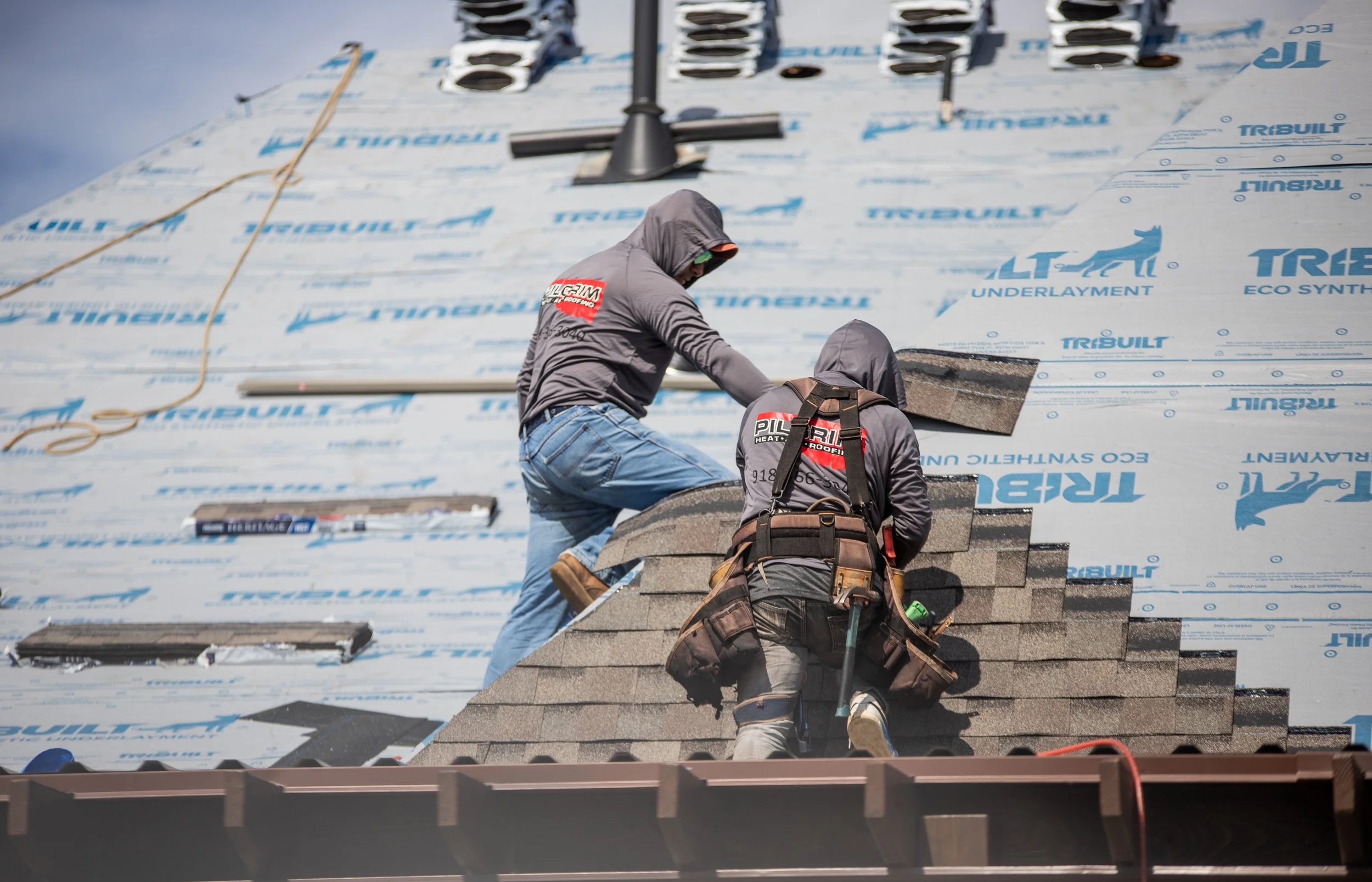
If your roof is leaking in winter, first get the water under control inside: move what you can, catch the drip, and poke a small hole in any bulging ceiling spot so it drains into a bucket instead of spreading.
Then take photos, find where the water is coming in if you safely can, and call a roofer. Do not climb on an icy roof. Roofs can be repaired in winter, and a small leak fixed now costs far less than a ceiling, insulation, and drywall later.
Our roof repair crew handles winter leaks across the Tulsa Area.
Step 1: Protect the inside of your house
Water does most of its damage after it gets past the roof, so start indoors.
Catch the water. Buckets, towels, and a tarp on the floor under the drip.
Move furniture and electronics out of the way.
Relieve a bulging ceiling. If the drywall is sagging with water, put a bucket under it and poke a small hole at the lowest point with a screwdriver. It sounds wrong, but it lets the water drain in one spot instead of spreading or bringing the ceiling down.
Watch for electrical hazards. If water is near a light fixture or outlet, turn off that circuit at the breaker.
Step 2: Check the attic
If you can get into your attic safely, take a flashlight and look for the wet spot. Water often runs along a rafter before it drips, so the spot on your ceiling may not be right under the hole in the roof. Mark what you find and set a bucket or a piece of plastic to catch the water. This helps the roofer find the source faster.
Step 3: Document everything
Take photos and video of the ceiling, the attic, and any damaged belongings before you clean up. Write down the date the leak started and the weather that day. If the leak came from storm damage, your insurance company will want this.
Step 4: Stay off the roof
Frost, ice, and wet shingles make a roof slick even on a sunny afternoon, and cold shingles crack under your feet. If you need something on the roof right now, like a tarp over a damaged area, call a roofer to do it. A pro tarp is a temporary fix that keeps water out until a full repair is possible.
What causes roof leaks in winter in Oklahoma
Oklahoma does not get the heavy snowpack northern states deal with, but our winters bring their own problems.
Damage from earlier storms
Hail and wind in spring and fall can crack shingles, lift tabs, and break seals without causing a leak right away. Winter rain, ice, and freeze-thaw cycles then find those weak spots. A leak in January can trace back to a storm in May. If that is the cause, our storm damage roof repair and insurance claim assistance pages explain how we handle it.
Ice storms and ice dams
When snow or ice on the roof melts during the day and refreezes at night, it can form a ridge of ice at the roof edge. Water backs up behind it and works under the shingles. Ice dams are less common here than up north, but a hard Oklahoma ice storm can cause them, especially on homes with poor attic ventilation or insulation.
Flashing and roof penetrations
Metal flashing around chimneys, vents, skylights, and walls expands and contracts with every temperature swing. Over time it pulls loose or the sealant cracks. These are among the leak points we check first.
Attic condensation
Sometimes a "leak" is not a roof leak at all. Warm, moist air from the house rises into a cold attic, condenses on the underside of the roof deck, and drips. If you see frost or water on the nails and decking across a wide area rather than in one spot, read our post on roof ventilation and winter attic condensation.
Clogged gutters
Leaves left in the gutters hold water and ice against the roof edge and fascia. Water can back up under the drip edge.
Once the water is contained, the next step is finding out why it got in. Our roof inspections are free. We will find the source, show you what we see, and tell you straight whether it is a small repair or something bigger.
Can a roof be repaired in winter?
Yes. Most leak repairs can be done in cold weather. Crews work on dry, above-freezing days when possible and use materials and methods made for cold application. Shingles can be hand-sealed when it is too cold for the factory strip to bond on its own. For a bigger job, a tarp can hold until a stretch of better weather.
Waiting until spring is usually the more expensive choice. Every rain and freeze puts more water into the decking, insulation, and drywall.
How to prevent winter leaks
Clean your gutters after the leaves are down.
Have the roof inspected after any major hail or wind storm, even if you do not see a leak.
Keep attic ventilation clear and insulation in good shape.
Trim branches that hang over the roof.
Our guide on getting your roof ready for winter has the full checklist. For everything else we do on the roof, see our roofing page.
Frequently asked questions
What should I do first if my roof is leaking in winter?
Contain the water inside: catch the drip, move belongings, and drain any bulging ceiling spot into a bucket. Then document the damage and call a roofer. Do not go up on an icy roof.
Can roofs be repaired in the winter?
Yes. Most leak repairs can be done on dry days, using cold-weather methods like hand-sealing shingles. A temporary tarp can protect the roof until a full repair is possible.
Why does my roof only leak in winter?
Common winter causes are ice dams, cracked flashing from temperature swings, storm damage that finally gives way, and attic condensation that drips like a leak.
Will insurance cover a roof leak in winter?
It depends on the cause and your policy. Sudden damage from a storm is more likely to be covered than wear and tear. Document everything and have the roof inspected before you file.
Is it a roof leak or condensation?
A leak usually shows up in one spot, often after rain or melting ice. Condensation shows up as frost or moisture spread across the underside of the roof deck and nails, often on cold mornings.
A winter leak gets worse with every storm, so get it found early. Call Pilgrim at 918-366-3040 or schedule your free roof inspection today.