
How to Get Your Roof Ready for Winter in Oklahoma
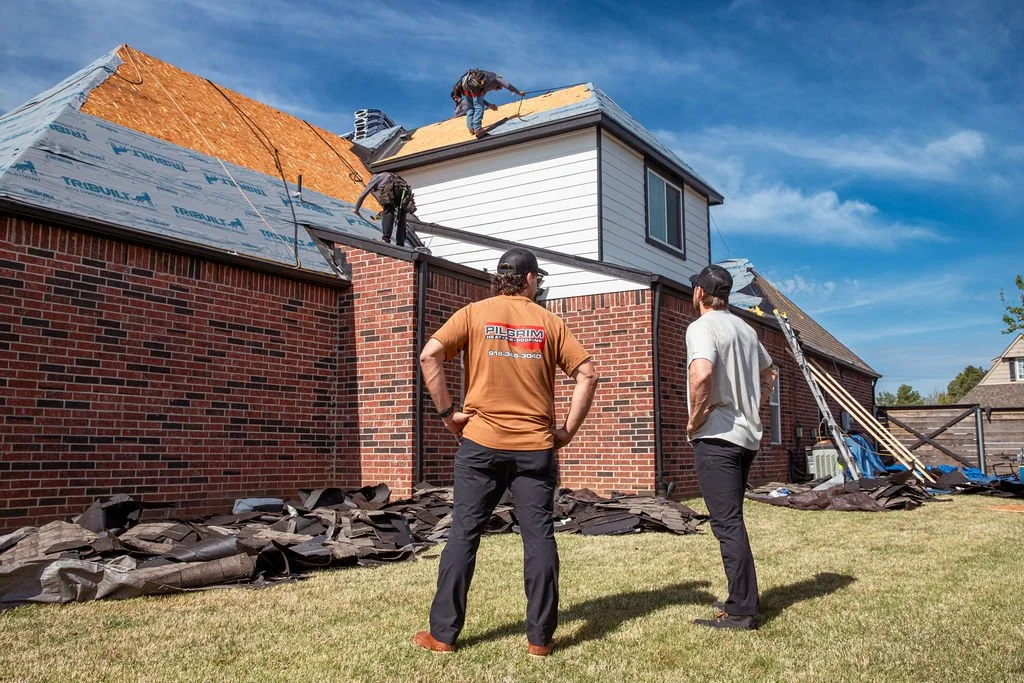
Getting your roof ready for winter comes down to six things: look over the shingles, check the flashing and boots, clean the gutters, trim back overhanging limbs, check the attic for daylight and moisture, and get a professional inspection if the roof is more than about ten years old. All of it is about the same goal. Small problems that a summer rain shrugs off become expensive problems once water freezes. That is why our roofing crews stay busy on inspections through October and November.
Oklahoma winters do not damage roofs the way summer hail does. They find the damage summer already caused, then make it worse. An ice storm is a slow, heavy, patient test of every weak spot on the roof, and there is not much you can do about it in January.
Look over the shingles from the ground
You do not need to climb up. Walk the perimeter of the house with binoculars or your phone camera zoomed in, and look for:
Missing shingles, or shingles lifted at a corner
Cracked, curled, or cupped shingles, especially on the south and west slopes that take the worst sun
Bald patches where the granules have worn off, which look darker and smoother than the shingles around them
Sagging anywhere along the ridge or between rafters
Granules piling up in the gutters or at the bottom of downspouts
Granule loss matters more than it looks. Those granules are the shingle's sunscreen. Once they are gone the asphalt underneath dries out, gets brittle, and cracks. A brittle shingle is the one that snaps under an ice load.
If you already know your roof is older, our guide on how long a roof lasts in Oklahoma has the realistic timelines for our climate, which run shorter than the numbers on the wrapper.
Check the flashing and the pipe boots
Most roof leaks do not start in the middle of a shingle field. They start at a penetration or a transition, where two materials meet and something has to seal the gap.
Look at the metal flashing around chimneys, in valleys, along walls, and where a lower roof meets a wall. You want it flat, sealed, and not lifted or rusted through.
Then look at the rubber boots around plumbing vent pipes. These are the single most common failure point we find on Tulsa Area roofs. The rubber dries out in Oklahoma sun and splits, usually somewhere between year eight and year twelve. A split boot is a ten-dollar part and a small labor charge in October. Left alone through a winter of freeze and thaw, it is the reason there is a stain on a bedroom ceiling in February.
Clean the gutters, and mean it
A clogged gutter in winter is worse than a clogged gutter in summer. Water backs up, sits against the roof edge, freezes, and pushes up under the shingles. That is how an ice dam starts, and an ice dam pushes water backward under the roof covering where nothing is designed to stop it.
Clear the leaves out of the troughs and flush the downspouts until water runs freely out the bottom. Check that the gutters are still pitched toward the downspouts and that the hangers have not pulled loose. A gutter full of frozen water is heavy enough to tear its own fasteners out of the fascia.
If yours are undersized, sagging, or dumping water against the foundation, fall is a good time to deal with it. Our gutter services page covers repair and replacement, and the winter argument for getting it right is stronger than the summer one.
Trim the limbs that hang over the roof
Ice is heavy. A limb that looks harmless in September becomes a hundred extra pounds of loaded branch after an ice storm, and a lot of the roof damage we repair after a winter storm is tree damage rather than storm damage.
Cut anything back so it is at least six to ten feet off the roof surface. That also cuts down on the leaves that end up in your gutters and the shade that keeps a north slope damp enough to grow moss and algae.
Go up in the attic with a flashlight
Ten minutes in the attic tells you things you cannot see from outside.
Turn the light off and look up. Any daylight coming through means a hole. Then turn the light on and look for water stains on the underside of the decking, dark streaks running down rafters, wet or matted insulation, and rusted nail heads. Rusty nails mean moisture is condensing up there even if nothing is actively leaking.
While you are up there, check that the insulation is not blocking the soffit vents at the eaves. Attic ventilation is what keeps the roof deck cold in winter, and a cold deck is what prevents ice dams. A warm attic melts snow on the roof, the meltwater runs down to the cold eave, refreezes, and builds a dam. Ventilation and insulation are the actual fix for that, not gutter heat cable.
Get a professional inspection before the weather turns
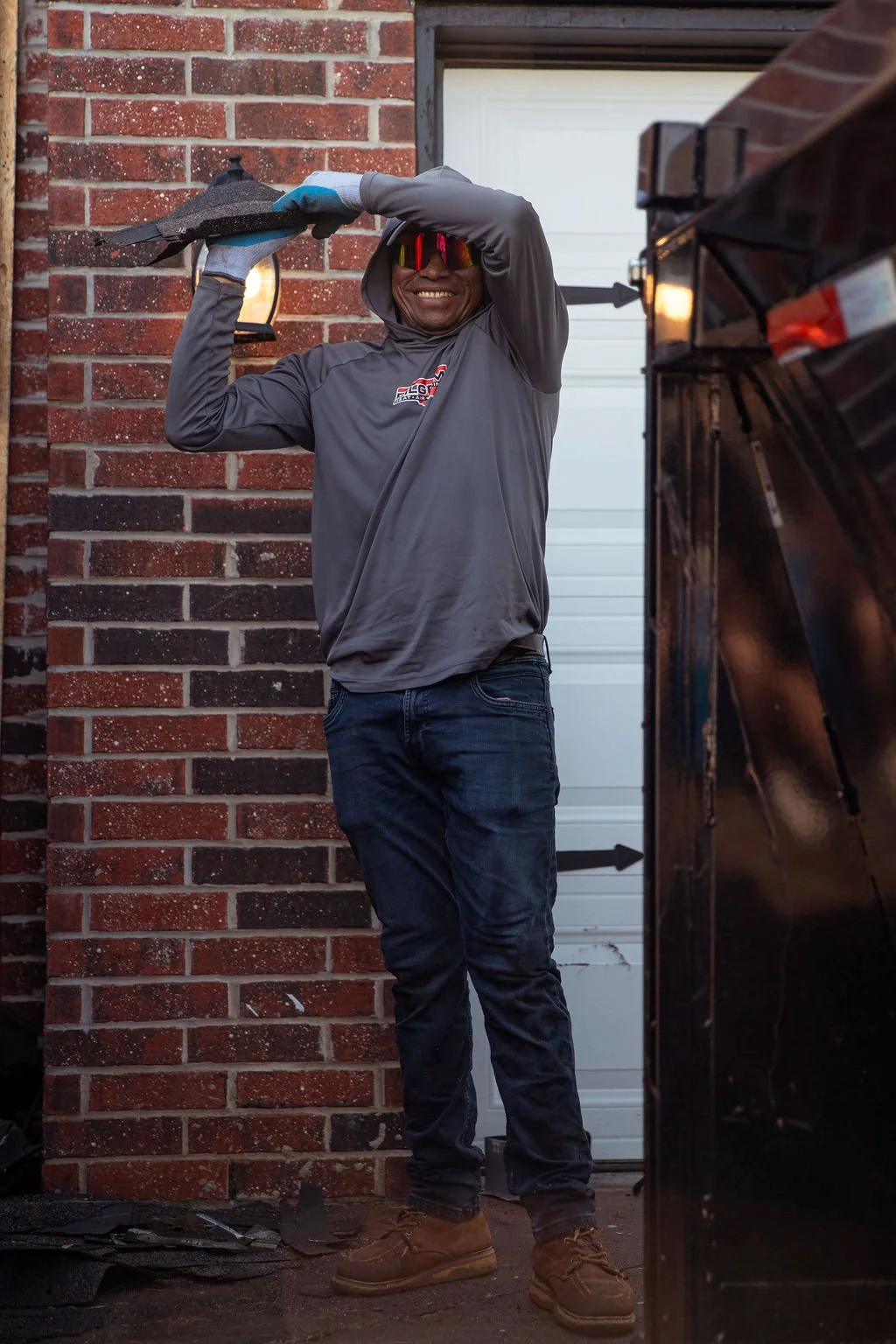
Everything above is what a homeowner can reasonably do. What it cannot tell you is whether the shingles have hail bruising from a storm last spring, whether the decking underneath has soft spots, or whether the roof has enough life left to make it through another winter.
We do free roof inspections across the Tulsa Area, and October is the right month for it. If there is hail or wind damage from earlier in the year that you never noticed, that matters for two reasons. It is a leak waiting for the first ice storm, and insurance claim windows do not stay open forever. We have been handling storm claims here since 1978 and we would rather find it now than after your ceiling tells you.
If the inspection turns up something small, a targeted roof repair in the fall is the cheapest version of that problem you will ever be offered. If it turns up something bigger, you get to make that decision on a mild afternoon rather than during an emergency.
Frequently asked questions
When should I have my roof inspected before winter?
October or early November, before the first freeze. A repair scheduled in fall is straightforward. The same repair during an ice storm means waiting in line behind everyone with active water coming in.
Do ice dams happen in Oklahoma?
Yes, though less often than farther north. Our freeze and thaw swings are actually good at making them, because snow melts and refreezes repeatedly. Poor attic ventilation and clogged gutters are the two conditions that cause them.
Can I have a roof replaced in winter?
Yes, though shingles need warm enough temperatures to seal properly, so cold-weather installs need extra care and the right adhesives. If the roof is clearly failing, fall is the better window.
How do I know if my shingles are too brittle for winter?
Widespread granule loss and cracked or curled edges are the signs. A roofer can check flexibility directly, since a brittle shingle cracks instead of bending.
Does a small leak really need attention before winter?
Yes. Water that gets into decking or framing and then freezes expands, which widens the gap it came through. A minor leak in November is often a much bigger one by March.
A fall roof check is an hour of your time and a free inspection. Get it done before the weather makes the decision for you, whether you are in Tulsa or one of the surrounding towns. Call Pilgrim at 918-366-3040 or schedule your free inspection.