

It is 98 degrees, your AC just quit, and the technician gives you a repair price that makes you wince. Now you are stuck on the question every homeowner dreads: pour money into the old unit again, or bite the bullet and replace it? There is no one-size answer, but there is a clear way to think it through. Pilgrim has helped Tulsa Area homeowners make this call since 1978, and we would rather you make the smart long-term choice than the quick one. Here is the framework we use, and you can weigh it before you even call for air conditioning service.
Start with three questions
Most repair-or-replace decisions come down to three things: how old the unit is, how expensive the repair is, and whether the system uses old refrigerant. Run through all three before you decide. Any one of them can tip the answer, and when two or three point the same way, the choice is usually obvious.
Question 1: How old is the unit?
Age is the first filter. In Oklahoma, most AC systems last about 12 to 15 years. If yours is under 10 and has been maintained, repairing it is usually the right move. If it is over 12, every repair is money spent on a system that is already near the end. A $600 fix on a 14-year-old unit often just delays a replacement you will be making within a couple of summers anyway.
Question 2: The 50% rule
Here is a simple test the trade uses. Multiply the age of the unit by the cost of the repair. If that number is more than the cost of a new system, replace it. A shorter version many homeowners use: if a single repair costs more than half the price of a new unit, replacement is usually the better value. A $1,500 repair on a system where a new one runs $6,000 is worth it. That same repair on a 13-year-old unit that keeps needing work is throwing good money after bad.
Question 3: What refrigerant does it use?
This one is bigger than most people realize right now. Older systems run on R-22, which is phased out and very expensive to recharge if you have a leak. Even the more recent R-410A refrigerant is now being phased down under federal rules, with R-454B taking over in new equipment. What this means for you: repairs that involve refrigerant on an older system are getting pricier, and parts for aging units are getting harder to find. If your system uses R-22 and needs a refrigerant-related repair, replacement is almost always the smarter money.
Other signs it is time to replace
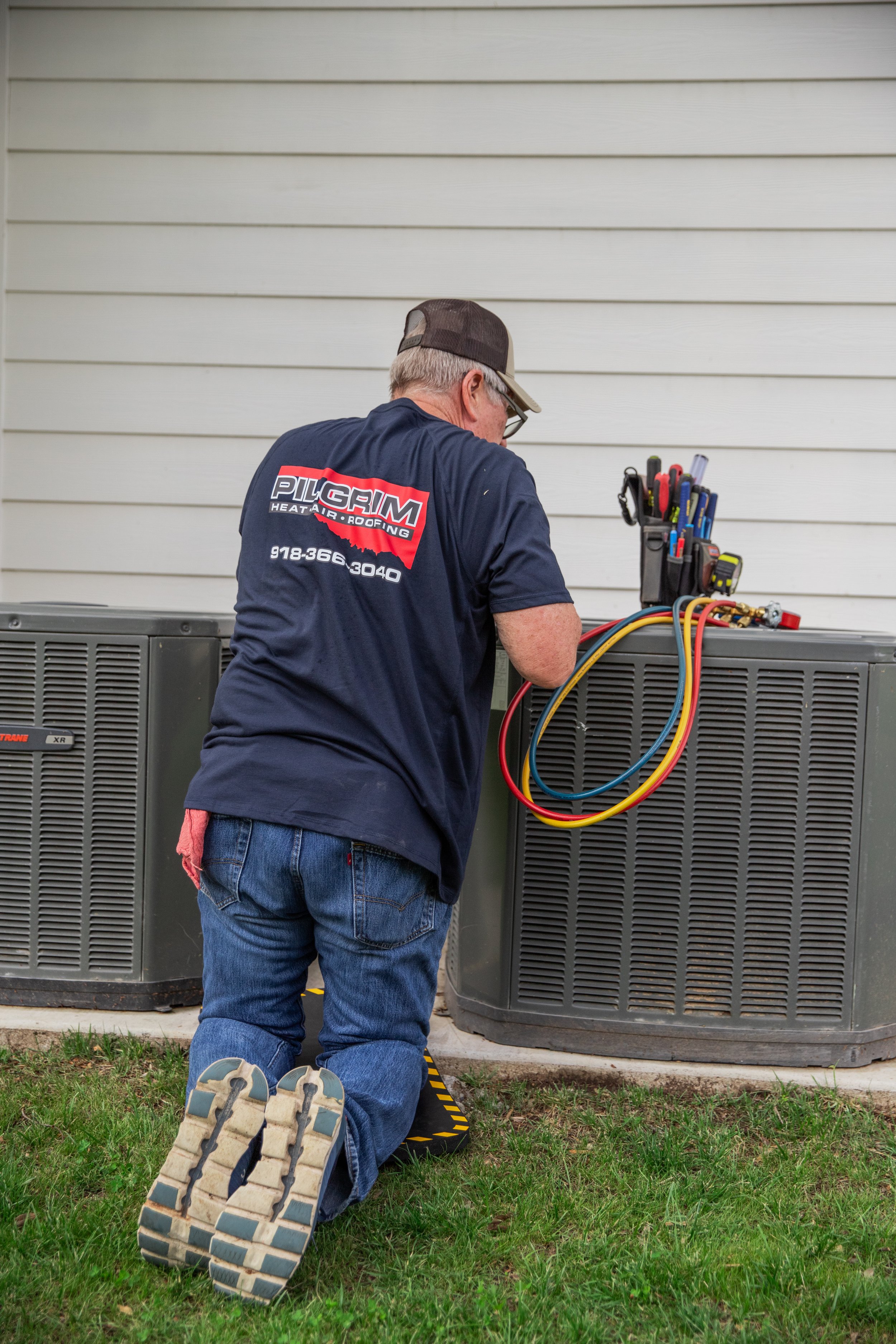
Beyond the three big questions, these push the decision toward replacement:
Repairs are becoming a pattern. Two or three service calls in a couple of seasons means the system is wearing out.
Your energy bills keep climbing. An aging, inefficient unit costs more to run every month. A new high-efficiency system can noticeably cut that.
Some rooms never get comfortable. Uneven cooling on the hottest days points to a system that can no longer keep up.
It short-cycles or runs constantly. Both signal a unit at the end of its useful life.
When repair is the right call
Replacement is not always the answer, and any honest company will tell you when to just fix it. If your unit is under 10 years old, the repair is minor, it uses current refrigerant, and it has been well maintained, repair it and keep going. A failed capacitor or a worn contactor on an otherwise healthy system is a straightforward fix, not a reason to replace. The goal is the choice that costs you the least over the next several years, not the biggest sale today.
The role of maintenance
A lot of emergency repair-or-replace decisions never had to happen. Regular maintenance catches a weak part or a low charge before it takes out the compressor, and it keeps the system efficient so it reaches its full lifespan. A maintenance membership keeps your system tuned and flags problems early, which is how you avoid being blindsided by a dead AC in July. When you do face the decision, get an honest diagnosis first. Schedule a visit or call 918-366-3040 and we will lay out your options straight, repair and replacement both.
Frequently asked questions
What is the 50% rule for replacing an AC? If a repair costs more than half the price of a new system, replacement is usually the better value. Multiplying the unit's age by the repair cost and comparing it to a new system is another common version of the test.
At what age should I replace my AC? Most Oklahoma systems last 12 to 15 years. Under 10, lean toward repair. Over 12, lean toward replacement, especially if a repair is needed.
Does the refrigerant type affect the decision? Yes. Systems on phased-out R-22 are expensive to service, and R-410A is now being phased down too. A refrigerant-related repair on an older system usually tips the decision to replace.
Will a new AC really lower my energy bills? Often, yes. A modern high-efficiency system uses noticeably less energy than a worn-out one, so part of the replacement cost comes back in lower monthly bills.
How do I get an honest repair-or-replace recommendation? Have a licensed technician diagnose the system and give you both options with real numbers. A reputable company explains the trade-offs rather than defaulting to the biggest sale.
Facing this decision in the heat of summer? Get a straight, no-pressure diagnosis from a family-owned team that has served the Tulsa Area since 1978. Call Pilgrim at 918-366-3040 or schedule online.