
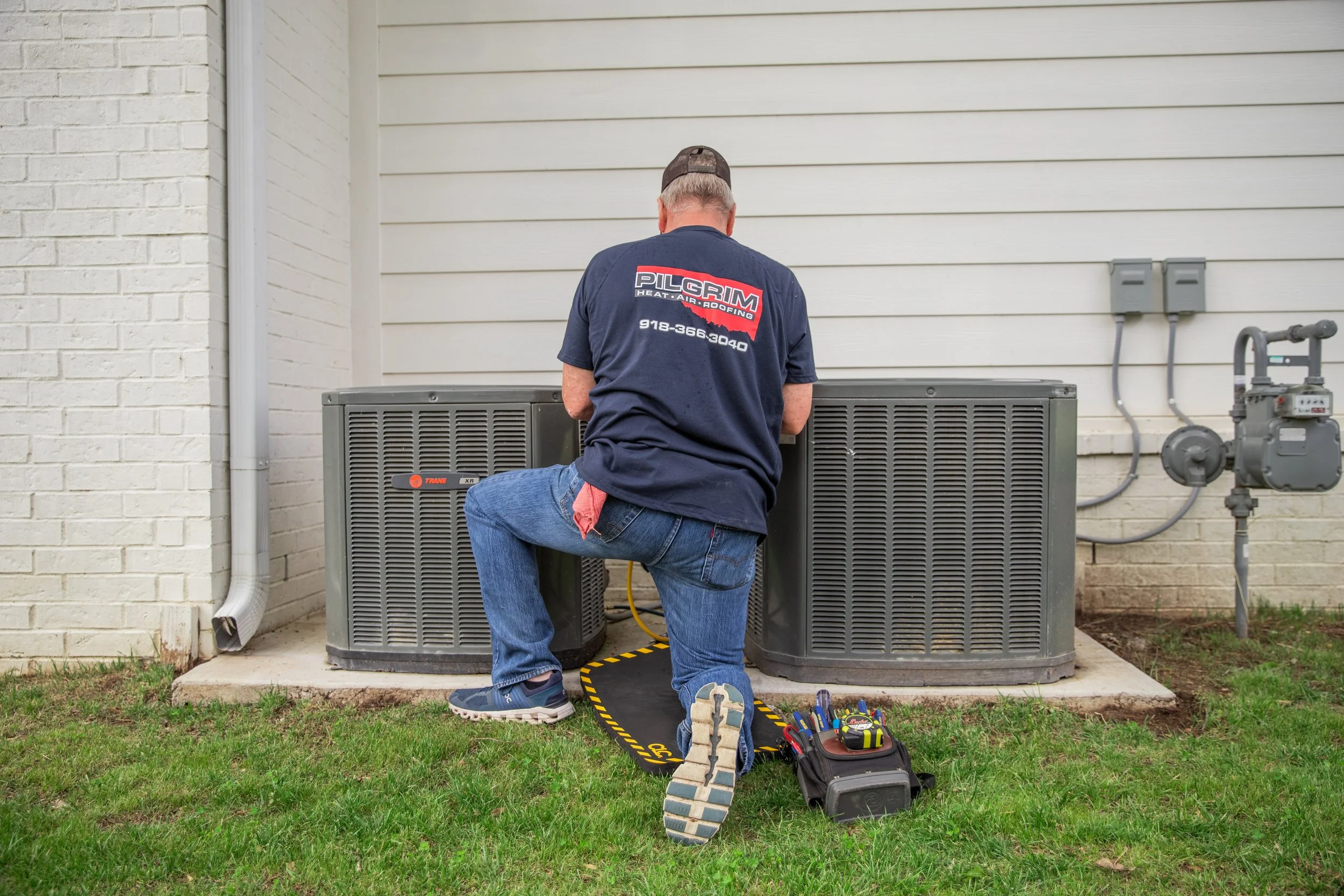
Whether you are replacing a worn-out system or cooling a new addition, sizing is the decision that quietly makes or breaks the whole install. Get it right and the system runs efficiently, cools evenly, and lasts. Get it wrong and you fight high bills, uneven rooms, and early breakdowns for years. The instinct is to go bigger to beat the Oklahoma heat, and that instinct is usually wrong. Pilgrim has sized and installed air conditioning systems across the Tulsa Area since 1978, so here is how it actually works.
The quick answer
AC size is measured in tons, and one ton removes 12,000 BTUs of heat per hour. A rough starting point is 20 to 25 BTUs per square foot of living space in our climate, which lands most homes somewhere between 2 and 5 tons. But a square-footage rule is only a starting point. The right size comes from a proper load calculation that accounts for your home's insulation, windows, ceiling height, sun exposure, and our brutal summer heat. That is why two homes of the same size can need different units.
Why bigger is not better
This is the mistake we correct most often. An oversized AC cools the air fast, hits the thermostat setting, and shuts off before it has run long enough to pull humidity out of the house. Then it kicks back on a few minutes later. That on-off-on-off pattern is called short-cycling, and it does real harm:
It leaves your home cool but clammy, because the unit never runs long enough to dehumidify.
It wears out the compressor and other parts faster, shortening the system's life.
It uses more energy than a right-sized unit that runs in longer, steadier cycles.
An undersized unit has the opposite problem. It runs constantly trying to keep up, never quite reaches the setting on the hottest days, and burns out early from the strain. The sweet spot is a unit sized to run in long, efficient cycles that both cool and dehumidify.
A rough tonnage guide by square footage
Use this only as a ballpark to set expectations before a professional load calculation:
Up to 1,200 sq ft: about 2 tons
1,200 to 1,800 sq ft: about 2.5 to 3 tons
1,800 to 2,400 sq ft: about 3.5 to 4 tons
2,400 to 3,000 sq ft: about 4 to 5 tons
Treat these as directional. A poorly insulated home with big west-facing windows needs more capacity than a tight, shaded home of the same size. Ceiling height, ductwork, and how much afternoon sun the house takes all move the number.
What a proper load calculation looks at
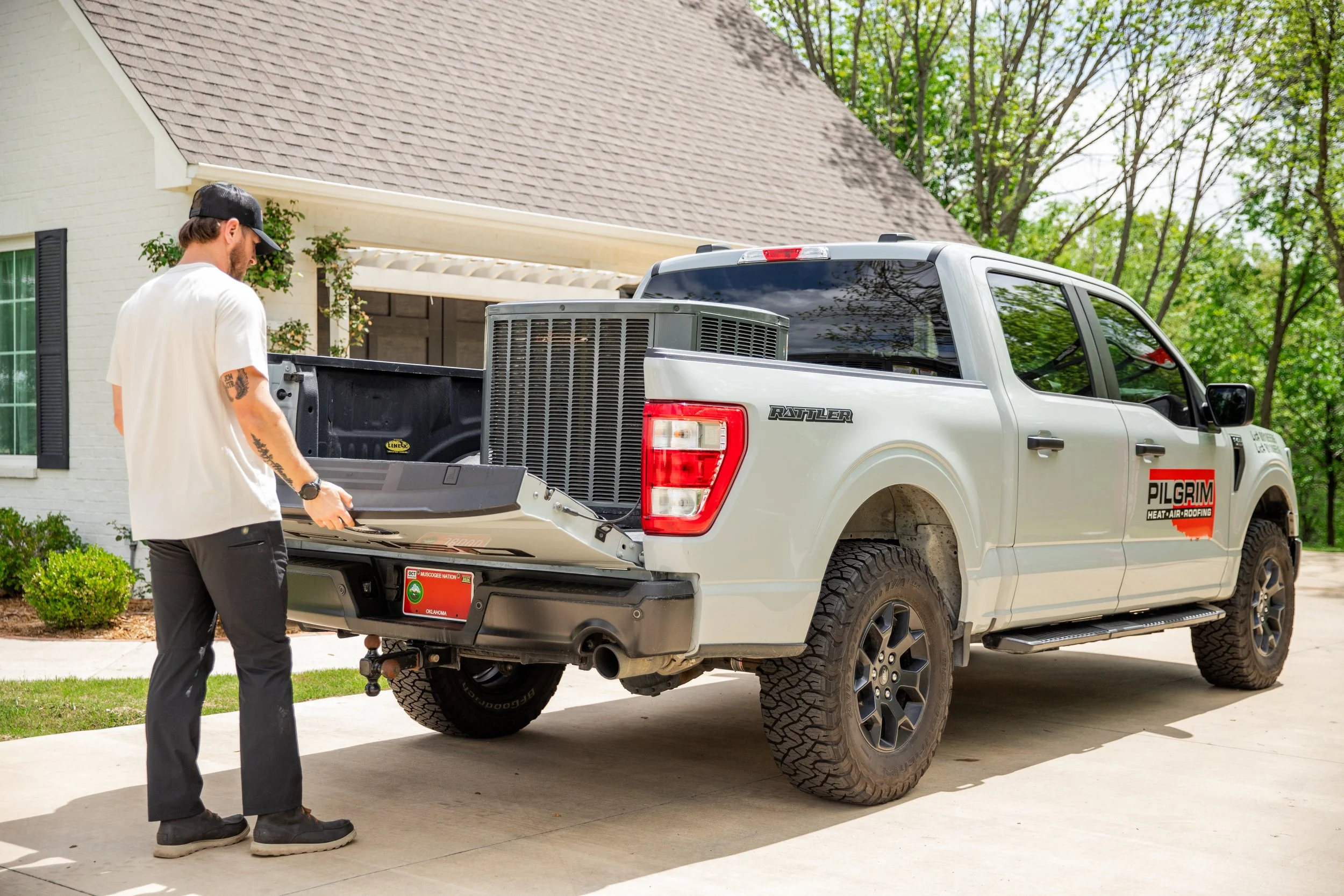
When we size a system, we do a load calculation rather than eyeball it. That means measuring the home and factoring in the things that actually drive the cooling need:
Square footage and ceiling height, for total air volume.
Insulation levels in the walls and attic.
The number, size, and direction your windows face.
Sun exposure and shade around the home.
How many people live there and the layout of the rooms.
The condition and design of the existing ductwork.
This is the step a "Chuck in a Truck" outfit skips when it just swaps in whatever size was there before or rounds up to be safe. Doing it right the first time means the system is matched to your actual home.
Why this matters even more in Oklahoma
Our cooling season is long and hot, so your AC runs for months. A right-sized system running in steady cycles will cool comfortably, control humidity, keep your energy bills reasonable, and last its full lifespan. An oversized or undersized one will cost you on all four counts, every summer, for the life of the unit. Sizing is not the place to guess. If you are planning a replacement or cooling a new space, schedule an in-home assessment or call 918-366-3040, and we will do the calculation and give you an honest recommendation.
Frequently asked questions
How many square feet does a ton of AC cool? As a rough guide in Oklahoma, about 400 to 600 square feet per ton, depending on insulation, windows, and sun exposure. A load calculation gives the accurate number for your home.
Is it better to oversize my AC to handle the heat? No. An oversized unit short-cycles, leaves the air humid, wears out faster, and uses more energy. A right-sized unit that runs longer, steadier cycles cools and dehumidifies better.
What happens if my AC is too small? It runs almost constantly, struggles to reach the set temperature on hot days, and wears out early from the nonstop strain.
Can I just match the size of my old unit? Not always. If the old unit was the wrong size, or you have changed insulation, windows, or added space, matching it repeats the mistake. A fresh load calculation is the safe route.
Does insulation really change what size AC I need? Yes, significantly. A well-insulated home holds cool air and needs less capacity, while a leaky, poorly insulated home needs more to keep up.
Getting the size right is the difference between a system you never think about and one that frustrates you every summer. Let a team that has sized Tulsa Area homes since 1978 do it right. Call Pilgrim at 918-366-3040 or schedule online.