
What Happens During a Furnace Tune-Up?
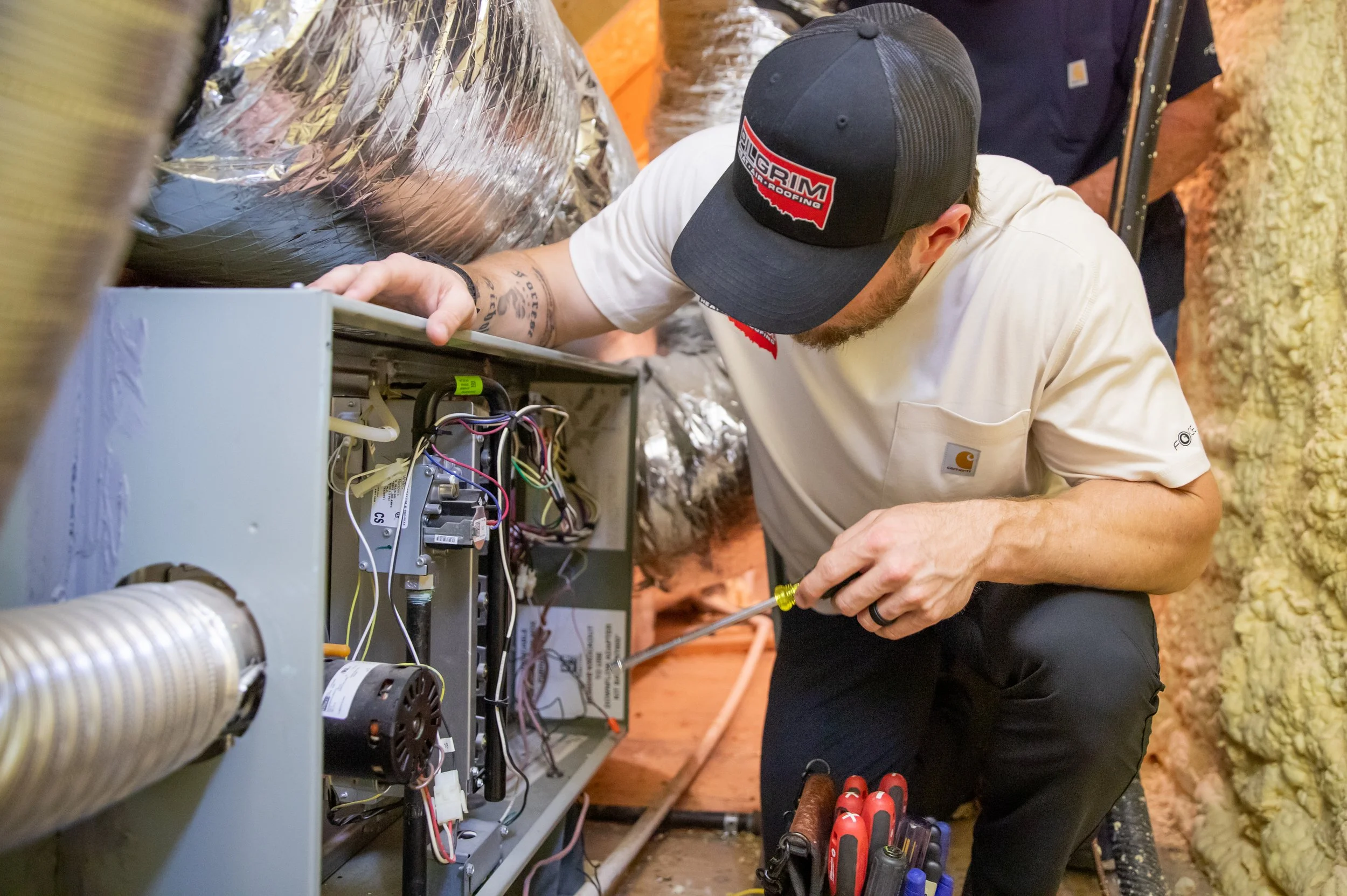
A furnace tune-up is a full inspection, cleaning, and safety test of your heating system, and it usually takes a tech somewhere between forty-five minutes and an hour and a half. The visit has three jobs: clean the parts that get dirty, test the parts that keep you safe, and measure the parts that tell us whether the furnace is running the way the manufacturer intended. That is what we do on every furnace maintenance and tune-up call.
Plenty of companies use the phrase and then send someone out to glance at the flame and hand you a quote. Here is the actual work, so you know what a real one looks like and can tell the difference.
First, the tech runs the furnace and watches it work
Before anything gets taken apart, the tech puts the system through a full heating cycle. Thermostat calls for heat. Inducer motor spins up. Pressure switch closes. Igniter glows. Gas valve opens. Burners light. Flame sensor proves the flame. Blower comes on after a delay. Then the whole thing shuts down in reverse order.
That sequence is where problems announce themselves. A furnace that takes three tries to light, or lights and then drops out after a few seconds, or brings the blower on too early, is telling you something specific. Watching a normal cycle first is how a tech knows what to look for once the panels come off.
Cleaning: burners, flame sensor, and blower
Dirt is the quiet cause of most heating failures. Three spots matter most.
The burners. Rust flakes, dust, and spider webs collect in the burner ports over a summer of sitting still. Partially blocked ports make the flame roll or burn uneven, which wastes gas and puts heat where it does not belong.
The flame sensor. This is a thin metal rod that sits in the flame and confirms to the control board that gas is actually burning. It builds up a film over time. When that film gets thick enough, the board stops seeing the flame and shuts the gas off as a safety measure. Your furnace lights for four seconds and quits. It is the most common no-heat call we get on a modern furnace, and cleaning that rod takes about ten minutes during a tune-up.
The blower. Dust cakes onto the blower wheel's fins, which cuts how much air it can move even though the motor sounds fine. Less airflow means less heat delivered and more heat trapped inside the furnace.
Safety checks: the heat exchanger and the shutoffs
This is the part you cannot do yourself and the reason the visit exists.
The heat exchanger is the metal wall between the burning gas and the air that goes into your house. If it cracks, combustion gases including carbon monoxide can cross over into that airstream. A tech inspects it visually, and on many systems with a combustion analyzer, looking for cracks, rust-through, and separated seams. A cracked heat exchanger means the furnace gets shut down. There is no partial fix and no waiting until spring.
From there the tech tests the safety controls that are supposed to stop the furnace when something goes wrong: the high-limit switch, the rollout switch, the pressure switch, and the flame sensor circuit. A furnace with a bypassed or failed safety will still make heat, which is exactly why nobody notices until it matters.
The flue and venting get checked too, for proper slope, secure joints, corrosion, and anything blocking the termination outside. That is where the exhaust is supposed to go.
Measurements: gas pressure, temperature rise, and amp draw
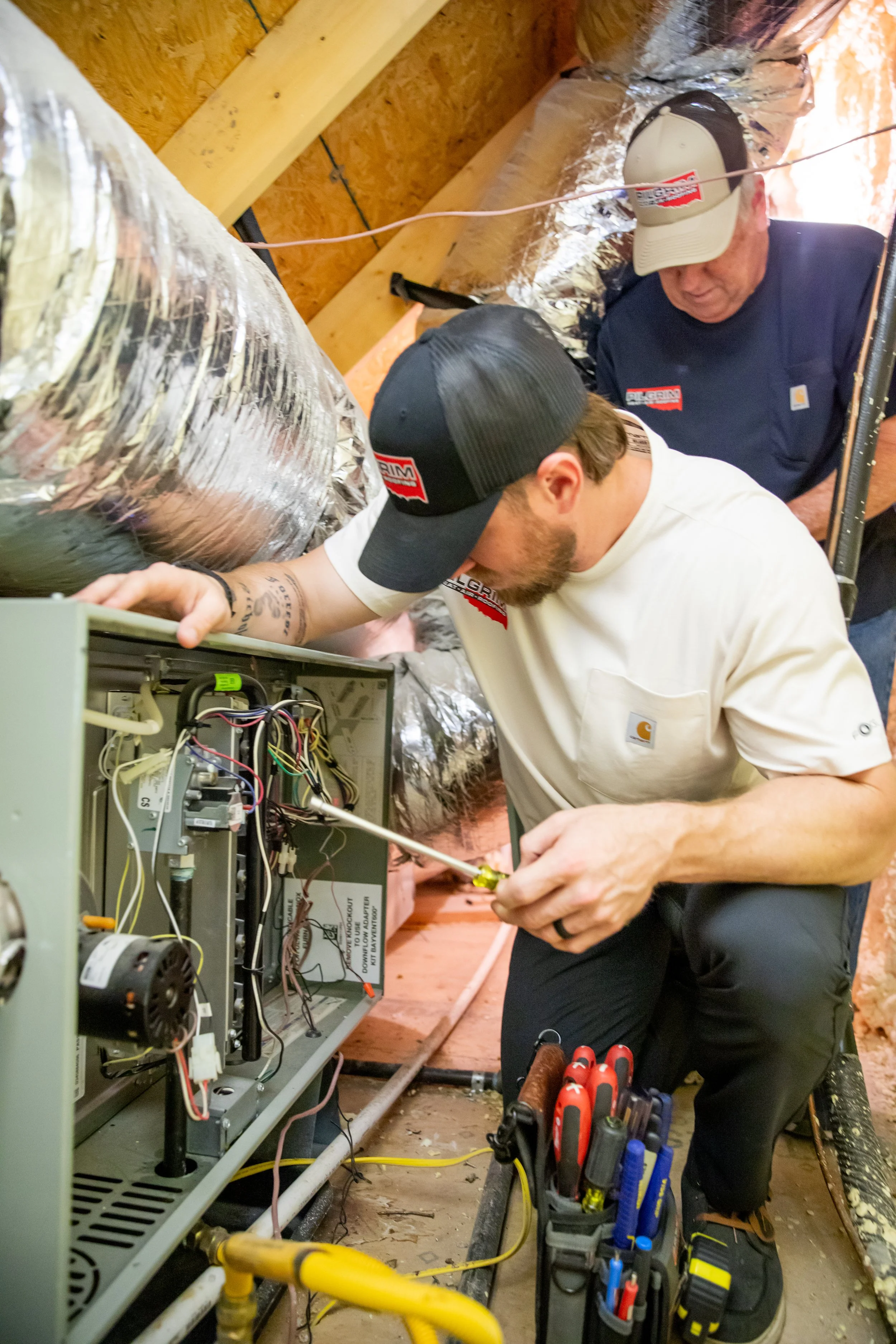
Now the numbers. The manufacturer prints a spec for each of these on the data plate inside the furnace door, and the tune-up is where the furnace gets compared against it.
Gas pressure gets read with a manometer and adjusted at the valve if it is off. Overfiring wears the heat exchanger out early. Underfiring means you paid for a furnace and are only getting part of it.
Temperature rise is the difference between the air going into the furnace and the air coming out. Too high points at an airflow problem. Too low usually points at a gas or a sizing issue.
Motor amp draw gets measured and compared to the rating. A motor pulling more current than it should is a motor telling you it is on the way out, months before it stops.
The tech also checks the electrical connections and tightens what has worked loose, checks the condensate drain on a high-efficiency furnace so it does not back up and trip the pressure switch mid-January, and puts a clean filter in.
What you should get at the end
A real tune-up ends with a conversation, not just a door hanger. You should hear what was found, what got fixed on the spot, what is worn but still working, and what needs watching. If a part is failing, you should get a straight answer on whether it makes sense to repair the furnace or start thinking about replacement, along with a price.
We do not pressure anyone into a new system on a maintenance visit. If your furnace has good years left, we will tell you that, and we would rather you called us in six years when it is actually time.
When to schedule it
Fall, before the first hard freeze. September through November is our tune-up season, and by late November the early appointments and weekends are gone. An October visit means that if the tech finds a bad igniter or a worn inducer motor, we order the part while you are still running the AC some afternoons.
Twice a year is the right cadence in this climate, once in fall for the furnace and once in spring for the AC. Our piece on how often to schedule HVAC maintenance in Oklahoma explains why the swings here are harder on equipment than a steadier climate would be. Both visits are built into our maintenance memberships, along with repair discounts and priority scheduling when the whole city calls at once.
Frequently asked questions
How long does a furnace tune-up take?
Usually forty-five minutes to an hour and a half. Older systems, attic installs, and anything that turns up a problem take longer.
Is a furnace tune-up really necessary every year?
Yes, for two reasons. It is how a cracked heat exchanger or a failed safety switch gets caught, and most manufacturer warranties require documented annual professional maintenance to stay valid.
What is the difference between a tune-up and an inspection?
An inspection looks and reports. A tune-up looks, cleans, tests, measures, and adjusts. If nothing was cleaned or measured, it was an inspection.
Will a tune-up lower my heating bill?
It helps. Clean burners, correct gas pressure, and proper airflow all mean less gas burned for the same amount of heat. The bigger payoff is not having the furnace quit on the coldest night of the year.
What if the tech finds something wrong?
You get told what it is, what it costs, and how urgent it is. The only thing we will not leave running is a furnace with a cracked heat exchanger, because that is a carbon monoxide risk.
Pilgrim has been doing heat and air in the Tulsa Area since 1978, and fall tune-ups are most of what our techs do in October. Call 918-366-3040 or book yours online while the schedule is still open. You can see everything else we handle on our heating and furnace service page.