
How to Prepare Your HVAC System for Winter in Oklahoma
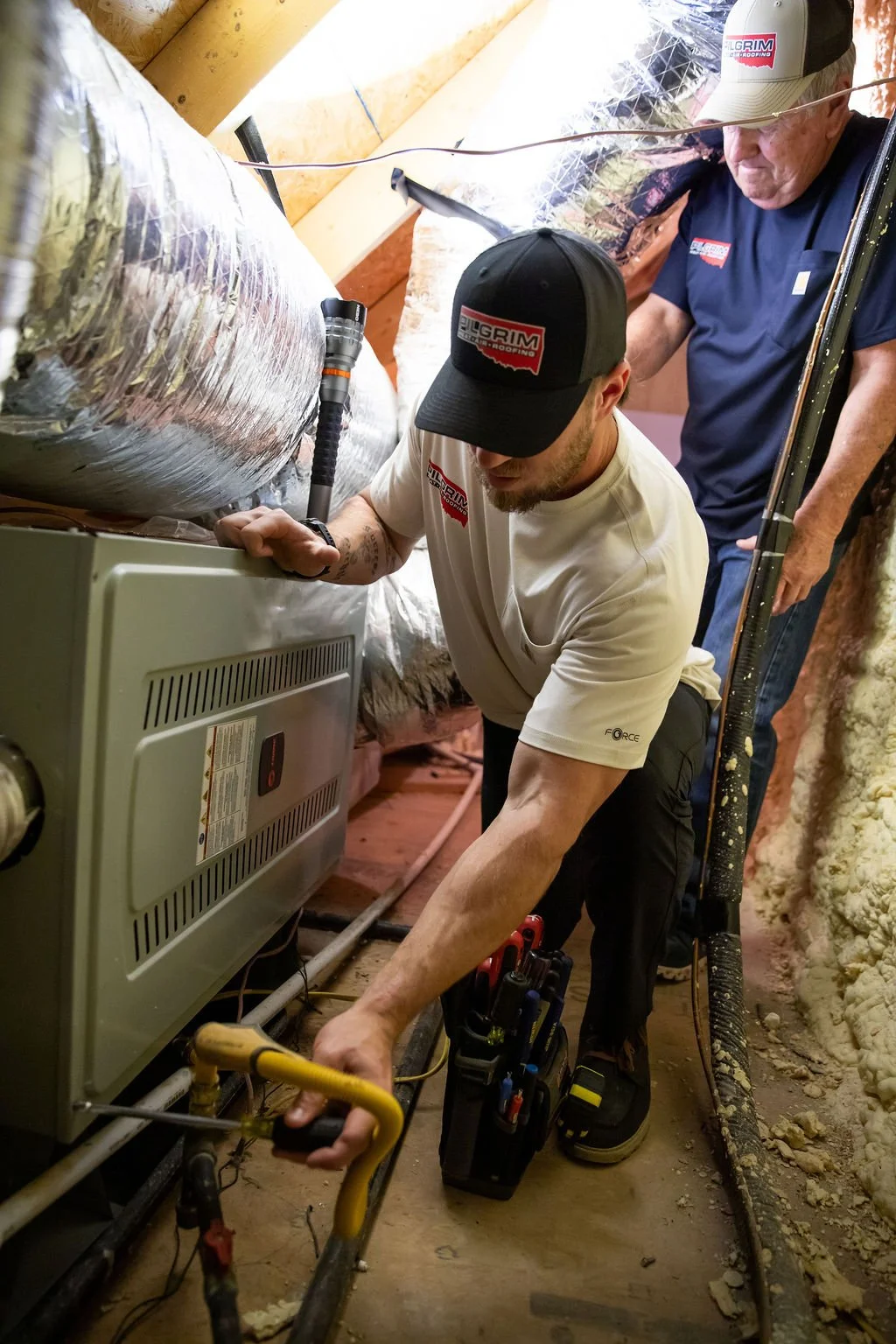
Get your furnace ready for winter by changing the filter, testing the heat before you need it, clearing the vents and the outdoor unit, checking your carbon monoxide detectors, and booking a tune-up. Four of those five you can do yourself in an afternoon. The tune-up is the one that needs a tech, because the parts that fail on a cold night are inside the cabinet where you cannot see them. We handle that side of it on our heating and furnace service calls all fall.
Oklahoma makes this harder than it needs to be. We run the air conditioning into October some years, then drop into the twenties a week later. Your furnace can sit unused for seven months and then get asked to run around the clock with no warm-up. That is why the first hard freeze is our busiest stretch of the year, and why almost everything below is about finding problems in October instead of January.
Change the filter before you turn on the heat
A dirty filter chokes airflow. The furnace fires, the heat cannot get out fast enough, the high-limit switch trips, and the burner shuts off. Then it fires again a few minutes later. That cycle is hard on the equipment and it is one of the most preventable no-heat calls we take.
How often depends on what your system uses:
One-inch pleated filters: every one to three months. Closer to one month if you have pets or anyone in the house with allergies.
Four to five-inch media filters in a cabinet: every six to twelve months.
Washable filters: rinse and dry all the way before it goes back in.
Write the date on the cardboard edge with a marker. It takes five seconds and it settles the argument next time.
Run the heat for fifteen minutes while it is still warm out
This is the step most people skip, and it is the one that saves the worst phone call. Set the thermostat to heat, push it a few degrees above room temperature, and let it run.
You are checking for three things. Does it come on within a minute or two. Is air coming out of the vents actually warm. Does it keep running instead of shutting off after a few minutes.
You will probably smell dust burning off. That is normal for the first twenty or thirty minutes of the season and it clears on its own. What is not normal is a burning plastic smell, a metallic screech, a loud bang on ignition, or a smell like rotten eggs. If you smell gas, leave the house and call the gas company from outside, then call us.
Doing this in October means a repair happens on a mild Tuesday with parts on the shelf. Doing it in January means competing with everyone else in the Tulsa Area who waited.
Clear the vents, the returns, and the outdoor unit
Walk the house and look at every supply vent and return grille. Furniture pushed against a return, a rug over a floor vent, or a closed damper in a spare bedroom all force the system to work harder for less heat. Open them and pull things back a few inches.
If you have a heat pump instead of a gas furnace, the outdoor unit matters in winter too, because that is where the heat comes from. Clear leaves, mulch, and dead grass back about two feet on all sides. Do not wrap or box in the whole unit. It needs airflow to run, and a full cover traps moisture against the coil.
Test your carbon monoxide detectors
Any home with a gas furnace, gas water heater, or gas range needs working carbon monoxide detectors. A cracked heat exchanger can leak combustion gases into the air you breathe, and you cannot smell or see it.
Press the test button on each one. Change the batteries. Check the manufacture date on the back, because the sensors themselves wear out after about seven to ten years even if the unit still chirps. Detectors go outside sleeping areas and on every level of the house.
We will look at the heat exchanger during a tune-up, but the detector is your backup, and backups matter when the failure is invisible.
Book the tune-up you cannot do yourself
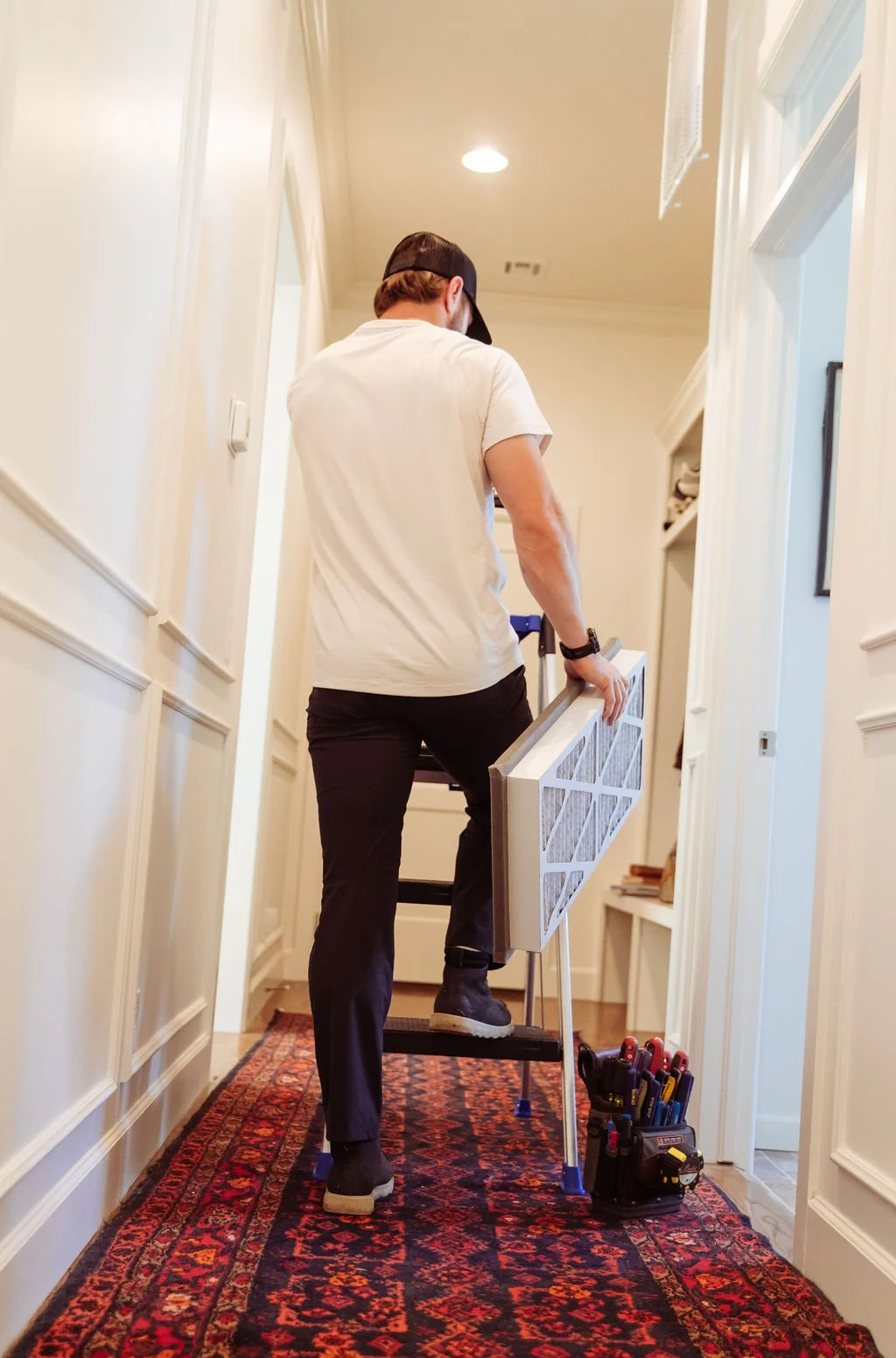
Everything above is homeowner work. What is left needs gauges, a meter, and someone who has taken a few hundred of these apart.
During a furnace maintenance and tune-up we clean the burners, pull and clean the flame sensor, inspect the heat exchanger for cracks, test the safety controls and the gas pressure, check the blower and the electrical connections, and confirm the whole sequence fires and shuts down the way it should. A dirty flame sensor is one of the most common reasons a modern furnace lights and then quits, and it is a ten-minute job in the fall and an emergency call in the cold.
We tune up furnaces from September through November, and the calendar fills from the outside in. If you want a weekend or an early morning, October is when to ask. Our maintenance memberships cover the fall visit and the spring AC visit and put members ahead of the line when a cold snap hits, which is the part that actually matters in a bad week.
What to do if something is already wrong
If you ran the heat and it did not work right, do not keep cycling it hoping it sorts itself out. Note what happened, what you heard, and what you smelled, then call. Our guide on how often to schedule HVAC maintenance in Oklahoma covers why twice a year is the right cadence in this climate, and homeowners across Tulsa and the surrounding towns get the same two-visit schedule from us for the same reason.
We have been doing heat and air in the Tulsa Area since 1978, which means we have watched a lot of families go into December on a furnace that was already telling them something in October. Call 918-366-3040 or schedule your tune-up online and get it off your list.
Frequently asked questions
When should I have my furnace serviced in Oklahoma?
September through November, before the first hard freeze. Early fall means a tech can order a part without you sitting in a cold house waiting for it.
How often should I change my furnace filter in winter?
Every one to three months for a standard one-inch pleated filter, and closer to one month with pets or allergies. Six to twelve months for a thick media filter.
Why does my furnace smell when I first turn it on?
Dust settles on the heat exchanger over the summer and burns off when the furnace fires. It usually clears within half an hour. A burning plastic or electrical smell is different and worth a call.
Do I need to cover my outdoor unit for winter?
No. If you have a heat pump it runs all winter and needs airflow. A lid-style cover on an air conditioner condenser is fine for keeping debris out, but never wrap the whole cabinet.
Can I skip the tune-up if the furnace worked fine last year?
You can, but a tune-up is how cracked heat exchangers, worn safety controls, and failing igniters get caught before they matter. Most manufacturer warranties also require documented annual service.
Cold weather in Oklahoma does not give much notice. Get the filter changed, run the heat, and get on the tune-up schedule while the calendar is still open. Call Pilgrim at 918-366-3040.